Beware of Fake Flipkart Ads on Instagram (AI Scam Breakdown)
A deep dive into how scammers clone top e-commerce websites like Flipkart in minutes using AI, featuring real screen-recorded proof of a ₹261 wardrobe scam.
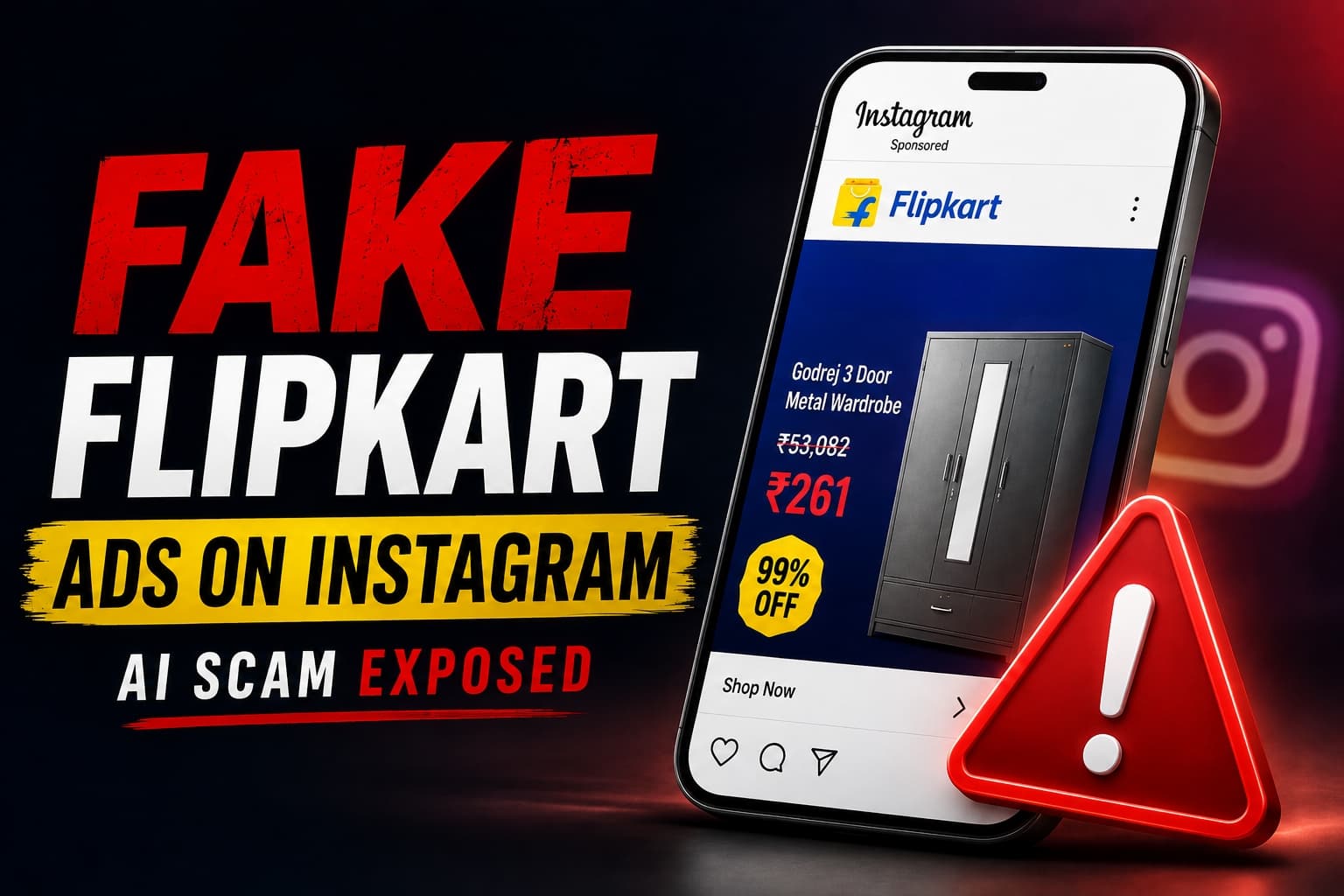
The ₹261 Godrej Wardrobe: How a Casual Instagram Scroll Turned into a Live Scam Investigation
We have all seen unbelievable shopping deals while scrolling through our social media feeds. Usually, we scroll past them. But yesterday, while browsing Instagram, a sponsored video ad stopped me in my tracks.
The video showed a sleek, modern, multi-tier modular storage unit with a bold text overlay: "Storage Finds at ₹249."
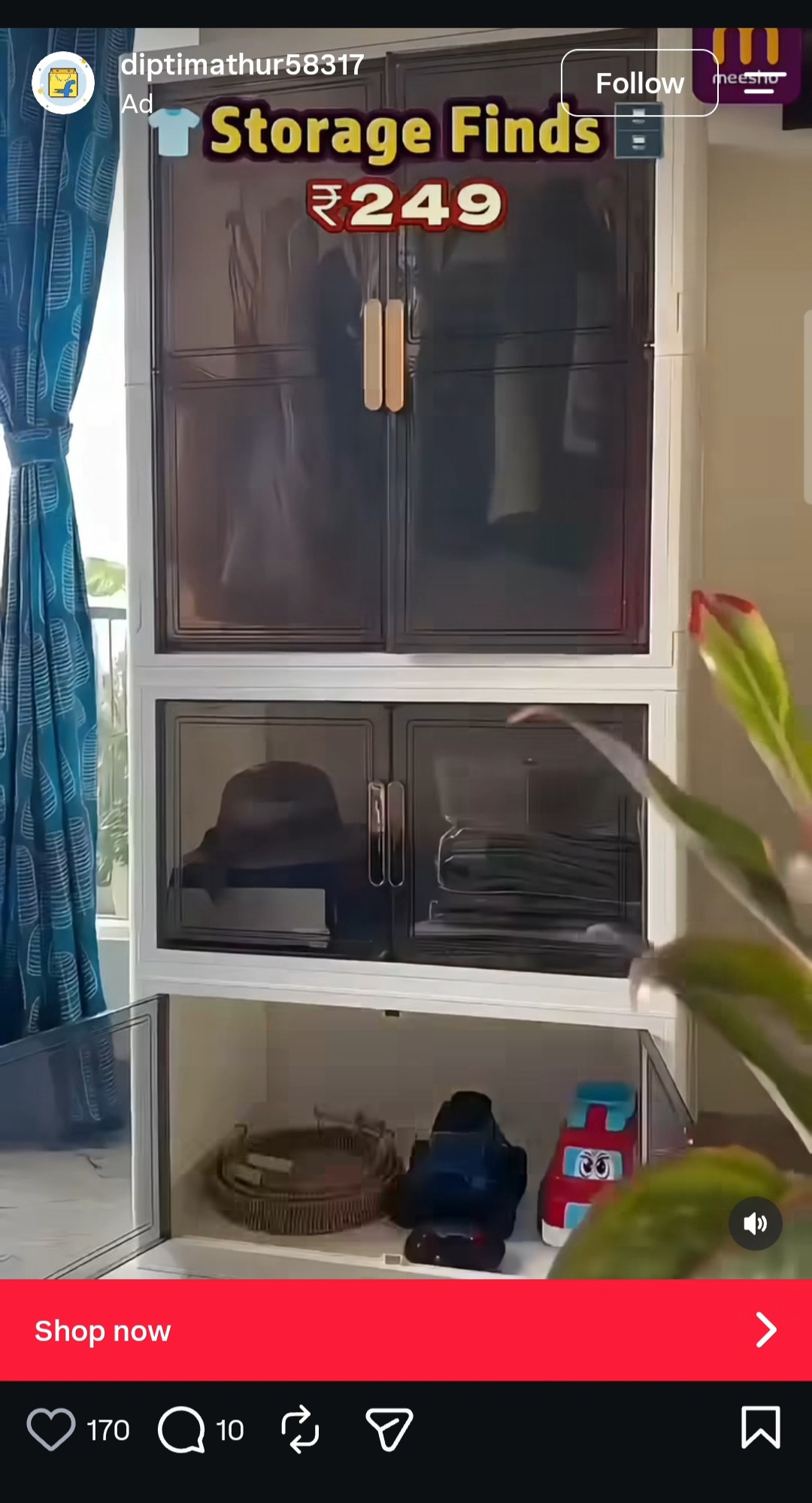
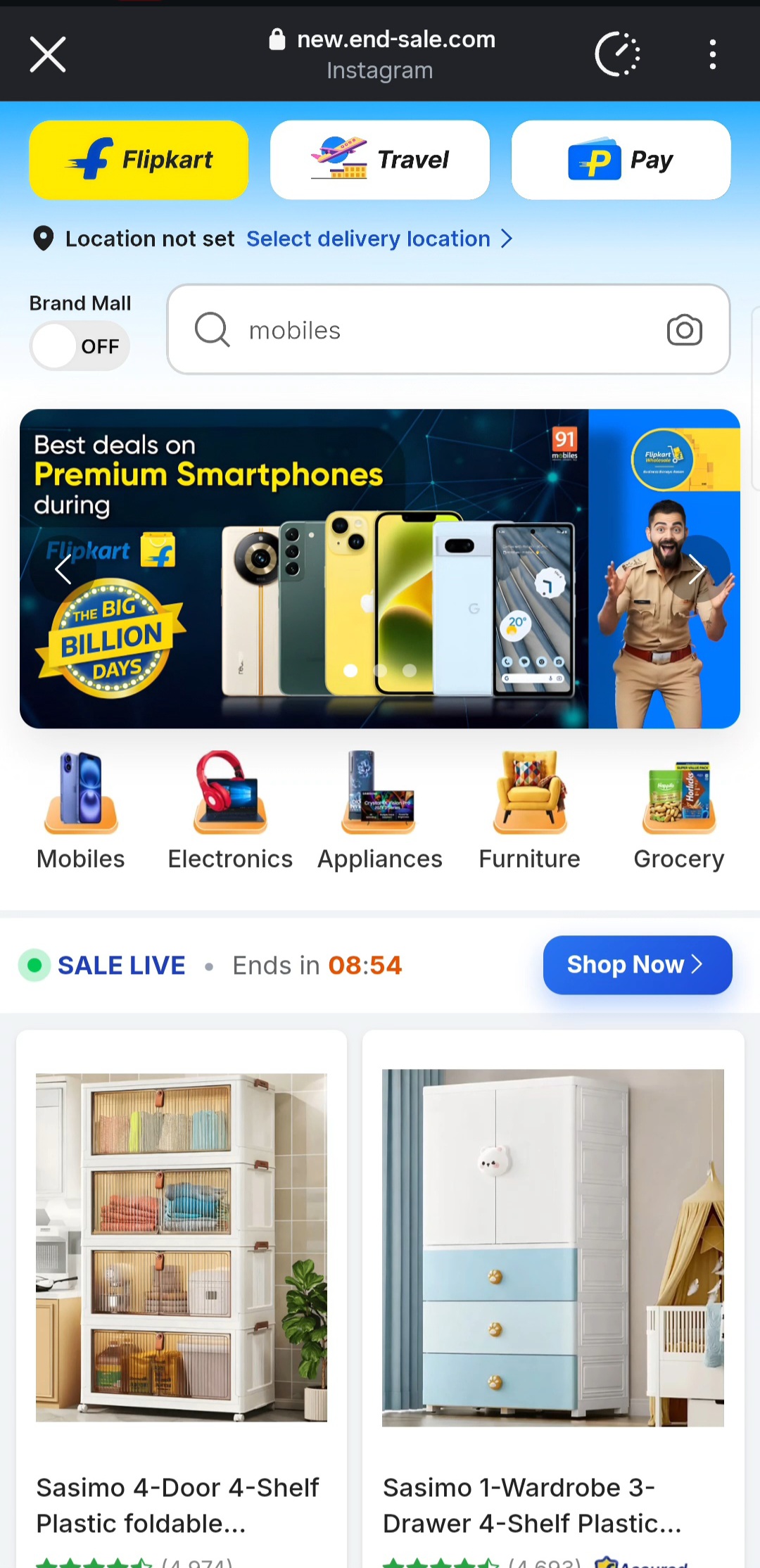
I clicked on the Shop Now button out of curiosity. The website that loaded inside Instagram's in-app browser was an astonishing, pixel-perfect replica of Flipkart’s signature Big Billion Days campaign.
Every single visual asset was in place: the familiar blue-and-yellow color scheme, the iconic search bar, high-resolution product carousels, customer review star ratings, and even genuine-looking "Flipkart Assured" badges.
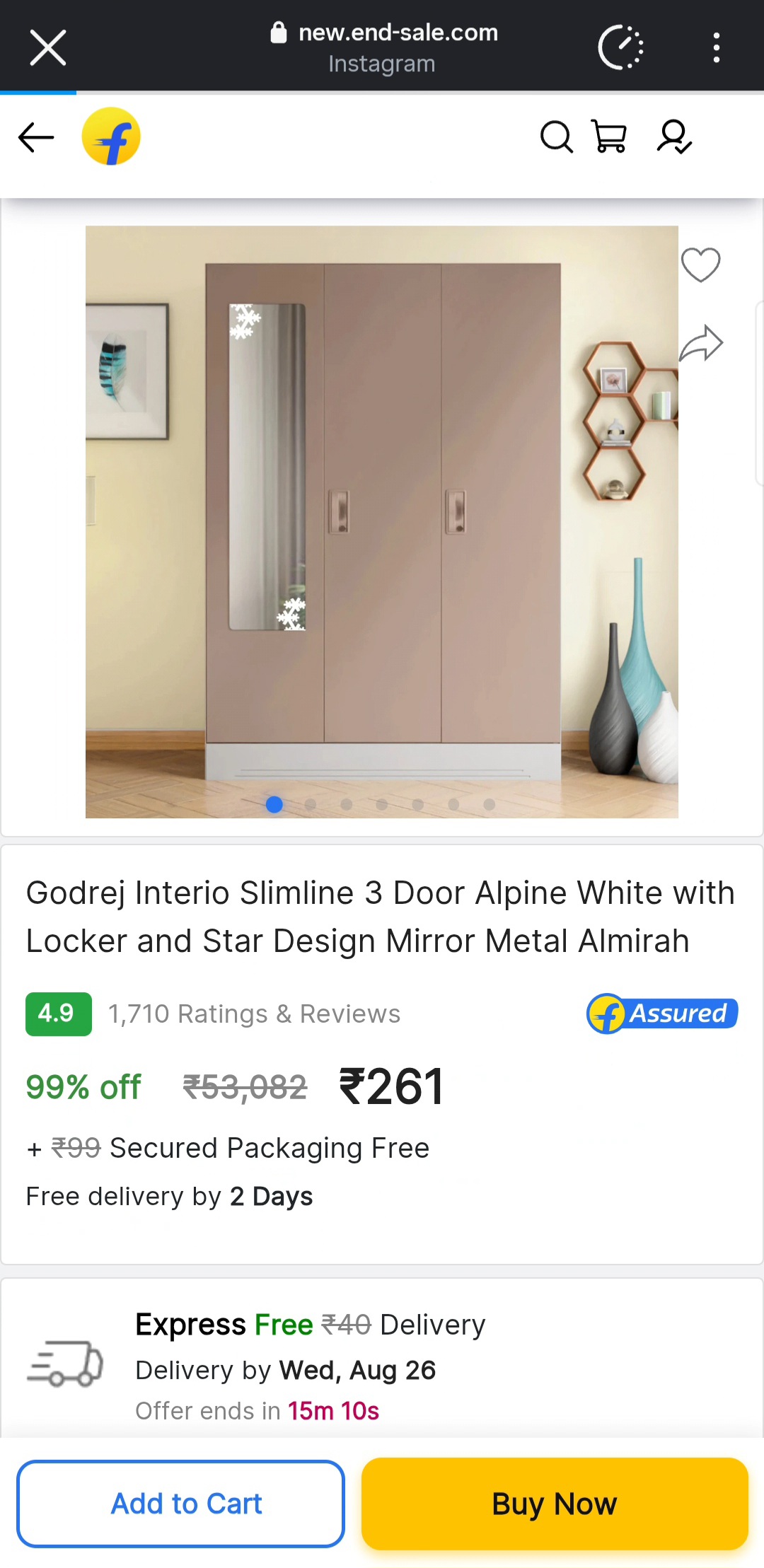
Sitting at the top of the product catalog was a Godrej Interio 3-Door Metal Wardrobe—an item that typically retails around ₹53,082—marked down by 99% to just ₹261.
As someone who builds web applications, tests AI automation tools, and works with code every single day, I spotted the trap within seconds. I immediately turned on my screen recorder to capture the entire checkout process step-by-step.
What I uncovered is a masterclass in how modern scammers use accessible web technology and AI tools to create convincing fraud operations that trick everyday shoppers.
The 5-Step Anatomy of a Modern Social Media Scam
Here is the exact step-by-step path scammers use to trap unsuspecting buyers:
- Step 1: The High-Production Video Ad: Scammers run sponsored video ads on Instagram and Facebook featuring real, viral home improvement or gadget videos paired with absurdly low prices like ₹199 or ₹249.
- Step 2: The In-App Browser Cloak: When a user taps the ad, it opens directly inside the social media app's built-in browser, where the address bar is small and easy to overlook.
- Step 3: The Pixel-Perfect Clone: The landing page replicates trusted brands like Flipkart or Amazon down to the exact buttons, logos, and countdown timers.
- Step 4: The Frictionless Fake Checkout: The form accepts any bogus address or random string of letters without checking PIN code validity or delivery availability.
- Step 5: The Personal UPI Payment Hijack: Instead of routing to a verified corporate merchant account, the checkout redirects payment straight to an individual fraudster's UPI ID.
How AI Makes Website Cloning Dangerously Fast and Cheap
To understand why these scams are spreading so rapidly, we need to look at how modern web development has changed over the past year.
Traditionally, building a convincing fake e-commerce website required serious effort:
- Manually copying HTML, CSS, and styling libraries.
- Downloading, organizing, and re-hosting hundreds of image assets.
- Setting up databases and configuring servers.
- Spending days debugging mobile responsiveness.
Today, generative AI tools and visual coding assistants have eliminated those technical barriers entirely.
1. Instant UI Replication from a Single Prompt or Screenshot
With modern AI tools and development platforms, anyone can take a screenshot of an official e-commerce page and feed it to an AI agent with a specific prompt:
Replicate this complete mobile e-commerce checkout page using Tailwind CSS and React. Make it look identical to the screenshot with product cards, rating stars, and an urgent countdown timer.
The AI generates production-ready, clean frontend code in less than 60 seconds.
2. Automated Web Scraping & Asset Extraction
Scammers no longer need to manually save images one by one. AI-assisted scraping scripts can scrape entire product descriptions, customer reviews, image galleries, and pricing tables directly from authentic marketplaces in seconds.
3. Zero-Cost Cloud Deployment
Using modern continuous deployment platforms like Vercel or Netlify connected to GitHub, launching a clone website live to the internet is 100% free and takes less than five minutes. Scammers register disposable, temporary domain names (like new.end-sale.com) for a few hundred rupees, run their ad campaigns for 48 hours, and shut them down before authorities can flag them.
AI is an incredible tool for legitimate creators and developers, but in the hands of bad actors, it acts as a force multiplier for deception.
The 5 Dead Giveaways That Exposed the Scam
During my screen recording test, several major red flags immediately gave away that this was an illegitimate operation:
1. The Domain Name Is Not Official
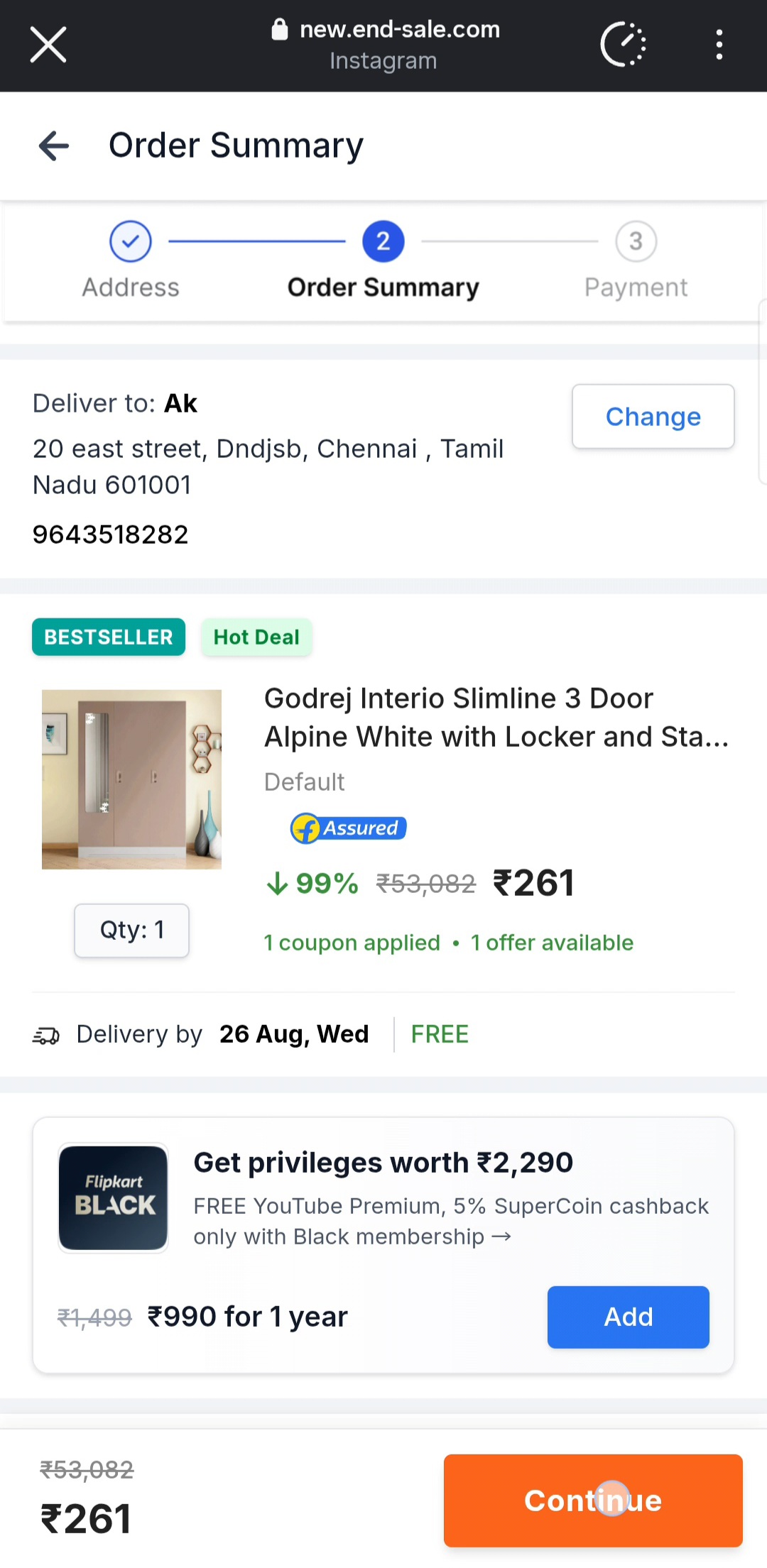
The most critical detail is always in the browser URL bar. Authentic Flipkart shopping pages will always be hosted on flipkart.com.
In this ad, the URL was new.end-sale.com. Scammers use strange subdomains and deceptive URL structures to mimic official sites while banking on mobile users not checking the top of their screens.
2. The Pricing Is Economically Impossible
A heavy 3-door carbon steel almirah weighs between 50 to 80 kilograms. The raw steel alone costs thousands of rupees, and shipping such an item across states costs hundreds. Offering brand-new Godrej furniture for ₹261 with free two-day delivery is physically and economically impossible.
Whenever an online store offers discounts between 90% and 99% on brand-name electronics, luxury items, or heavy furniture, it is guaranteed to be fraudulent.
3. Missing Address & PIN Code Validation
When I filled out the delivery address during my recording, I deliberately entered random, gibberish letters for the street name and a dummy phone number.
A genuine e-commerce platform immediately validates the PIN code against their logistics database, displays serviceability alerts, and verifies whether the phone number is linked to an account. The scam website approved the fake address instantly because its only goal is pushing the victim to the payment screen.
4. Forced Advance Payment & Disabled COD
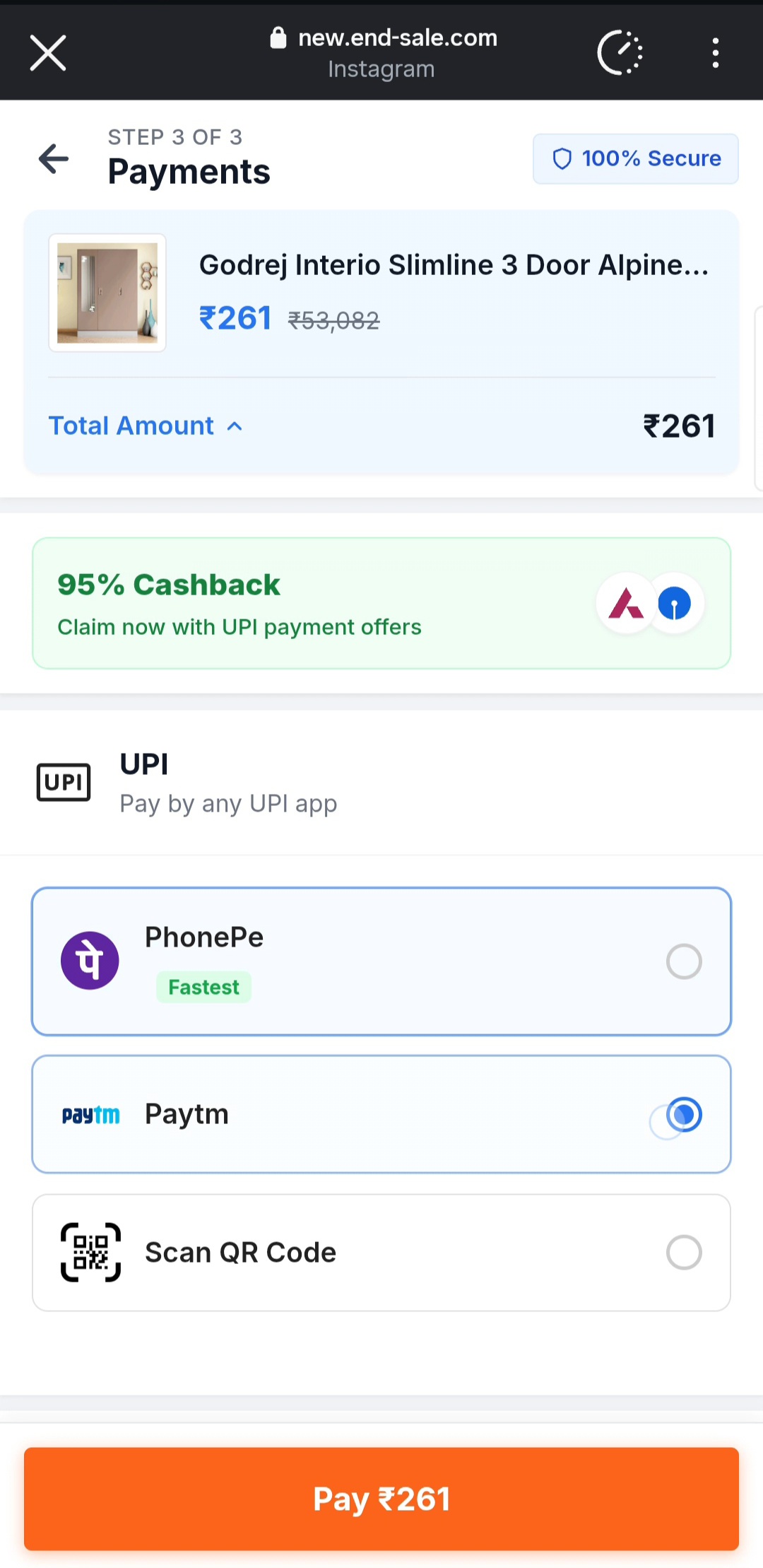
Notice how standard safety options like Cash on Delivery (COD), Credit Cards, and Debit Cards are marked as "Unavailable" on the payment page.
Scammers deliberately disable COD because they have no intention of shipping any package. They exclusively enable direct UPI payments to ensure money leaves your bank account instantly and cannot be charged back or reversed through a bank dispute.
5. Private Individual UPI Virtual Payment Addresses (VPAs)
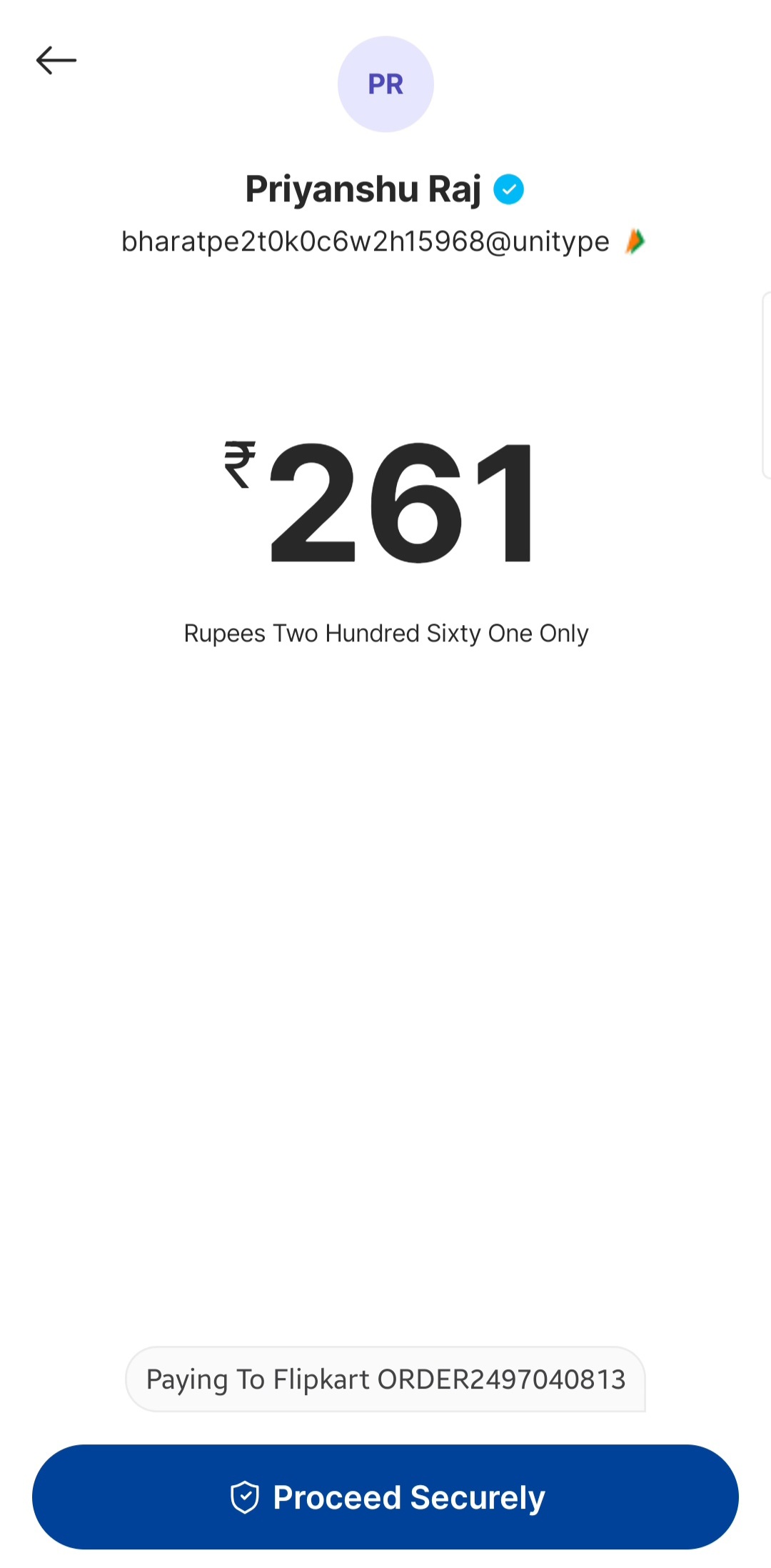
When the checkout generated a payment intent for ₹261 through PhonePe and Paytm, the payment was directed to an individual's name (Priyanshu Raj via bharatpe2t...) instead of Flipkart Internet Private Limited’s registered corporate merchant gateway.
Authentic Marketplace vs. Fake AI-Cloned Storefront
| Security Feature | Official Flipkart Platform | Fake Scam Website (new.end-sale.com) |
|---|---|---|
| Website Address | flipkart.com (Verified SSL) | Random disposable domains (*.end-sale.com) |
| Payment Recipient | Registered corporate merchant account | Private individual UPI ID / personal BharatPe VPA |
| Discount Logic | Market-standard promotional offers (10%–50%) | Absurd 95%–99% price slashes on luxury goods |
| Payment Options | UPI, Credit/Debit Cards, Net Banking, EMI, COD | UPI Only (Advance non-refundable transfer) |
| Address Verification | Real-time PIN code verification & auto-fill | Accepts random text and fake numbers |
| App Redirection | Prompts to open the official installed mobile app | Keeps user locked inside the in-app webview |
Practical Action Steps: How to Stay Safe Online
Protecting yourself and your family from these AI-driven social media scams requires simple habits:
- Never Complete Purchases Inside Social Media Browsers: If you see an interesting deal on Instagram, Facebook, or YouTube, close the app. Open your regular browser or the official Flipkart/Amazon app on your phone and search for the item directly. If the deal is real, it will be visible on the official platform.
- Inspect the Full URL: Make it a habit to check the address bar before entering personal details or proceeding to checkout. Look for the exact domain name, not just familiar brand logos.
- Check the Recipient Name on Your UPI App: Before entering your UPI PIN on Google Pay, PhonePe, or Paytm, look at the recipient's name on your screen. If the name is an individual person rather than a verified business entity, cancel the transaction immediately.
- Report Scam Ads on Instagram: When you encounter a fraudulent ad, tap the three dots in the top-right corner of the post and select Report Ad → Scam or Misleading.
- What to Do If You Paid: If you accidentally fell for one of these traps, report the incident immediately to the National Cyber Crime Reporting Portal at cybercrime.gov.in or call the national cyber financial helpline at 1930 within the first 24 hours to increase the chances of freezing the recipient's account.
Final Thoughts: Navigating the New Era of Web Fraud
AI has made building beautiful web applications accessible to everyone. But the exact same tools that allow developers to launch exciting startups in a weekend also enable fraudsters to manufacture deceptive storefronts in minutes.
In this new era, visual polish is no longer proof of credibility. Stay alert, always verify the source domain, and remember: if a deal looks too good to be true, it almost certainly is.